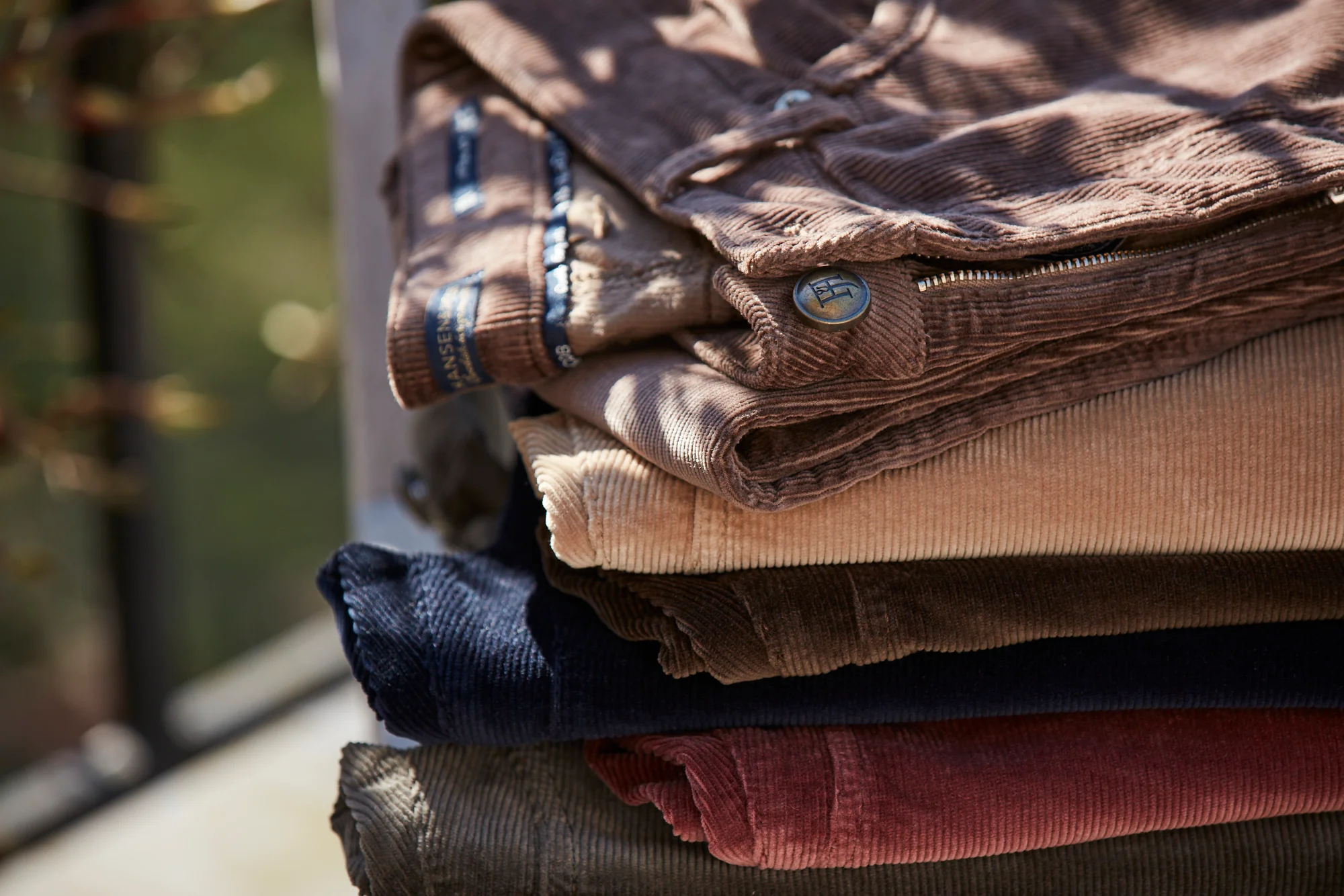
11/11 – A Celebration of Corduroy’s Lines and Heritage
There is a particular aesthetic in the linear. November 11th, 11/11, has become the international date to celebrate corduroy – a choice dictated by the resemblance of the digits to the fabric's characteristic wales. For us at Hansen & Jacob, corduroy is more than just a seasonal choice; it is a cornerstone of the modern man's wardrobe, bridging the gap between academic elegance and robust functionality.
TL;DR
Corduroy Day is celebrated on 11/11 due to the date's resemblance to the fabric's wales. Corduroy is a tactile, durable material that offers a sophisticated depth to autumn outfits.
- Corduroy originates from the Egyptian 'fustian' fabric.
- The term 'wales' refers to the number of ridges per inch.
- The material provides natural texture and life to monochrome outfits.
- Hansen & Jacob combines classic corduroy with modern stretch for comfort.
From Royal Courts to 11/11
The history of corduroy is as vibrant as its texture. Despite the name, the fabric's roots extend far beyond the English industrial city. Its origins are often traced back to 'fustian', a heavy cotton fabric used as early as ancient Egypt. During the 18th century, it became a European favourite for its durability, and legend has it that the name Corduroy stems from the French 'corde du roi' – the king's cord. While the etymology is debated, the fact remains: corduroy has always been a fabric for those who appreciate substance.
Celebrating the fabric on November 11th is no coincidence. The four ones in the date perfectly mirror the vertical ridges, or 'wales', that define the material. It is a day to acknowledge the craftsmanship required to create these lines.
Wales – The Art of Choosing the Right Structure
When discussing corduroy, the term 'wales' is central. It refers to the number of ridges per inch. A wide wale (low wale) provides a more robust and rustic impression, perfect for an outer jacket or a sturdy overshirt. A fine wale (high wale) feels more like velvet and works excellently in dressier contexts.
Hansen & Jacob's corduroy garments are developed with a focus on tactility. We choose qualities that have a natural lustre but can also withstand daily wear. By adding a small amount of stretch, we ensure our corduroy trousers maintain their fit without losing their classic character.
How to Wear Corduroy This Autumn
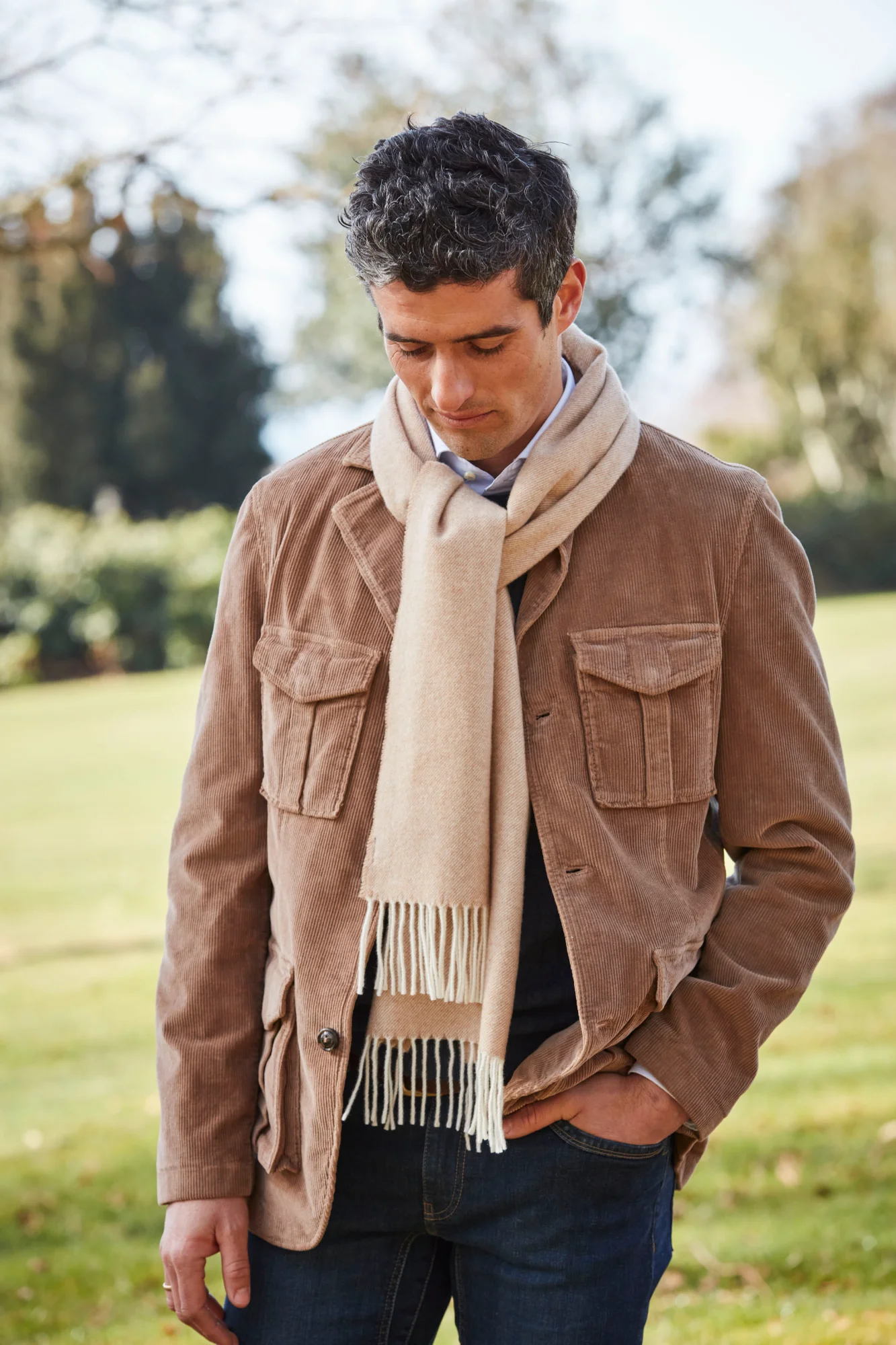
Corduroy is a rewarding material to build an outfit around because it creates contrast against other fabrics. One of our favourites is combining a terracotta corduroy overshirt with a pair of dark jeans. It creates a look that feels considered yet entirely relaxed.
The Versatile Overshirt
Our corduroy overshirt works just as well as a light outer layer during early autumn as a warming layer under a winter coat. The soft structure and functional pockets make it an indispensable garment for the modern man.

Choice of the Season: Corduroy 5-pkt
Our interpretation of the classic five-pocket model in corduroy. Available in several autumnal shades such as terracotta, navy, and beige. Experience the difference in a fabric that only gets more beautiful with time.
Summary
Whether you choose corduroy for its historical heritage or its practical qualities, 11/11 is a day to celebrate the fabric's place in the wardrobe. It is a fabric that is not only seen, but also felt. Discover our collection and find your own favourites among the lines.
Frequently asked questions
Why is Corduroy Day celebrated on November 11th?
The date was chosen because the digits 11/11 resemble the vertical ridges (wales) in corduroy fabric.
What does 'wale' mean in regards to corduroy?
Wale refers to the number of ridges per inch. The lower the number, the wider and bolder the ridges.